Integration & Automation
Once your Quoting Engine is live, we wire it directly into the rest of your business: CRM systems, accounts ledger, e-signatures, and inbox. Custom connectors with zero monthly task limits.
Quoting Engine integrations
What we typically connect to first
How it works
Three structured steps to connect the Quoting Engine to the software your business uses daily.
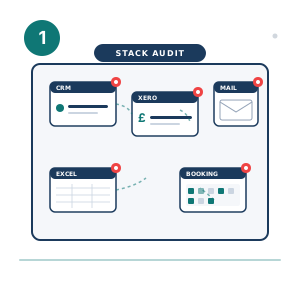
We map your post-engine flow
Once the Pricing Engine is live, the friction shifts. We trace where every accepted quote needs to go next (CRM, accounting, e-signature, inbox) and that becomes the integration spec.
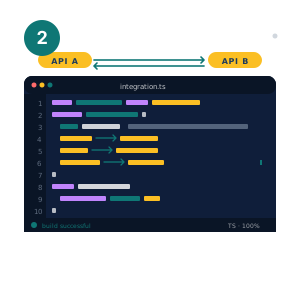
We build the connector
Custom code that reads from one API and writes to another, with the right field mapping, error handling, and retries. No Zapier subscriptions, no per-task limits.

We monitor and maintain
APIs change. We watch for failures, keep the integration running, and adapt when providers release new versions or your engine grows new outputs.
What you get
Bespoke code designed to secure data integrity across your entire digital workflow.